
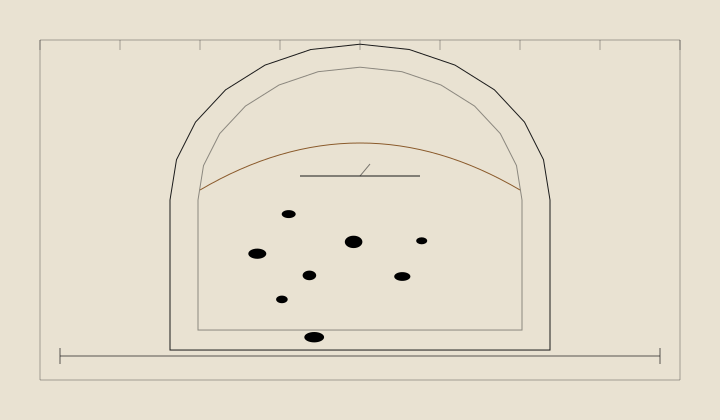
At 50% whole wheat you need two things that the 30% loaf does not: a bran soaker and a scoring method that does not tear the surface. The soaker is simple — the bran sits in the full water amount for two hours before the flour is added — and the scoring is about depth and speed rather than pattern.
Soaking the bran for two hours
Take all the water in the recipe (425 g) and 60 g of the whole wheat flour, mix, and leave two hours at room temperature. The bran absorbs what it needs and the remaining water stays available for the gluten. This one step is the difference between a 50% loaf that is open and moist and one that is dry and tight at the same hydration.
| Ingredient | Weight | Baker's % |
|---|---|---|
| Bread flour | 250 g | 50% |
| Whole wheat | 250 g | 50% |
| Water, with 60 g of the whole wheat as a soaker | 425 g | 85% |
| Starter 1:4:4, 7 h at 26 °C | 130 g | 26% |
| Salt | 11 g | 2.2% |
Four folds and a 3.5-hour bulk
Soaked bran is more forgiving than dry bran, but it still interrupts the gluten. Four coil folds, 40 minutes apart, working gently — a fold that tears means the bran is being dragged through the network rather than around it. Bulk 3.5 hours at 26 °C to a 45% rise, then 13 hours cold.
A square score that does not tear
A shallow square cut with the corners left uncut, 5 mm deep. Cutting the four sides of a square and stopping short of the corners gives the loaf a lid that lifts in one piece without the tearing you get from a full square. Cut with a fast, light stroke at the moment the dough comes out of the fridge.
- Crumb rating 4/5: even, soft, no dense ring under the crust.
- 240 °C, 25 minutes of steam, 48 minutes total.
- Rice flour dusting on the banneton; wheat flour sticks to a dough this wet.
Scoring a 50% whole wheat loaf is about speed. A slow cut drags the bran across the surface and leaves a ragged edge that will not lift. One second, one stroke.
Sources / 参考来源
Published reference works consulted for this log: