
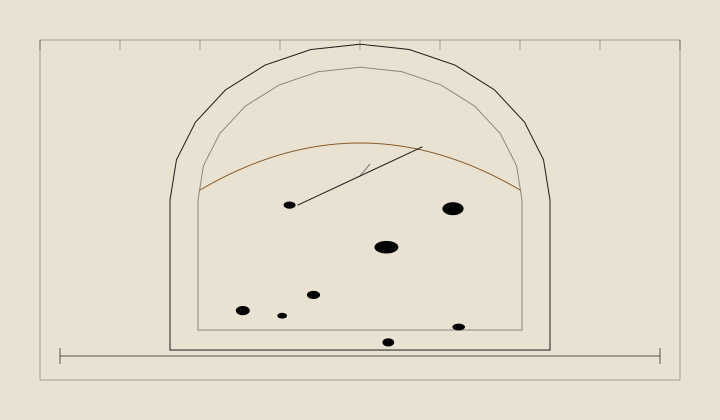
At 40% emmer the bran stops being a decoration and starts being a problem. Emmer bran is thicker and sharper than wheat bran, and it cuts through the gluten network as the dough is folded. The fix is water: 84% hydration, which sounds extreme for a bread with this much whole grain but is what the bran needs to stop competing with the gluten for moisture.
Sharp bran needs water before it needs folding
The emmer goes into the water with the bread flour for a 45-minute autolyse before anything else is added. By the end of that rest the bran has softened enough that the first fold feels like a normal dough. Skip the autolyse and the first three folds will feel like folding wet sand.
| Ingredient | Weight | Baker's % |
|---|---|---|
| Bread flour | 300 g | 60% |
| Whole emmer | 200 g | 40% |
| Water | 420 g | 84% |
| Starter 1:5:5, 8 h at 25 °C | 120 g | 24% |
| Salt | 10.5 g | 2.1% |
Four folds, and a bulk that finishes early
Four coil folds, 35 minutes apart. Emmer ferments faster than wheat — its enzymes are more active and its starch is more accessible — so the bulk finishes at 3.75 hours to a 50% rise. Check at 3.5 hours: if the dough is domed and jiggly with visible bubbles at the edge of the tub, it is done, and 20 extra minutes will cost you oven spring.
The fan score and a slightly cooler bake
Six cuts arranged in a fan from one corner, 25 degrees, 8 mm deep. The fan opens in sequence and gives an even rise across a large boule. 238 °C, 25 minutes of steam, 48 minutes total — a few degrees cooler than a wheat loaf, because emmer's higher sugar content browns the crust faster.
- Crumb rating 4/5: creamy yellow, nutty, slightly chewy crust.
- The aroma is at its strongest in the first hour after baking.
- Keeps three days; the crust softens on day two.
Emmer absorbs water slowly enough that a dough which feels dry at the first fold will feel correct at the third. Do not add water in the first hour, no matter how tempting it is.
Sources / 参考来源
Published reference works consulted for this log: