
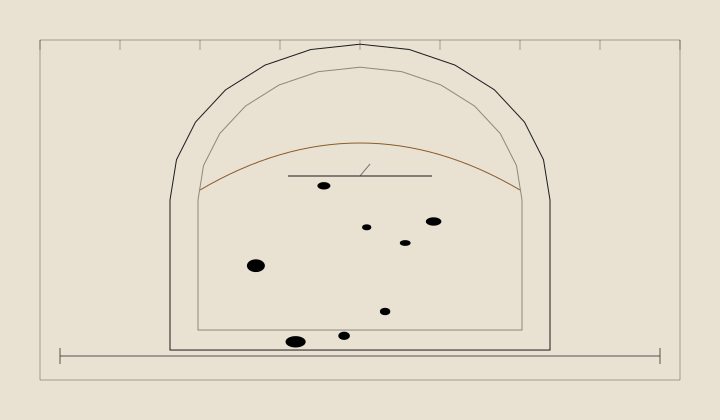
A 900 g country loaf with 60% whole wheat, 5% rye and 80% water, baked at 245 °C for 52 minutes. This is the largest loaf in the ledger and the one that survives a whole week. It also has the longest steam of any entry here, because a boule this size needs 25 minutes of moisture to open before the crust sets.
Why 60% whole wheat is the practical ceiling for a free-form loaf
At 70% and above, the bran cuts enough gluten that a 900 g boule spreads during the first ten minutes in the oven and the score seals shut. At 60% the loaf still springs, still opens at the cross, and the crumb is open enough to hold butter without tearing. The 5% rye is not filler: it drops the pH faster, which strengthens the bran and makes the dough noticeably easier to shape on the second day of a starter cycle.
| Ingredient | Weight | Baker's % |
|---|---|---|
| Bread flour | 315 g | 35% |
| Whole wheat | 540 g | 60% |
| Rye | 45 g | 5% |
| Water | 720 g | 80% |
| Starter, 1:4:4 | 225 g | 25% |
| Salt | 20 g | 2.2% |
Autolyse, folds and a gentle bulk
The whole wheat and rye go into the water first for 40 minutes with no starter and no salt. That rest hydrates the bran, and by the time the starter goes in the dough already feels like a 60% white dough. Four coil folds, 40 minutes apart, bulk 4 hours at 25 °C to 50%.
The cross, the steam and the long bake
A classic cross — four cuts meeting at the centre, 9 mm deep — is the right score for a big whole grain boule because it gives the loaf four places to open instead of one. 245 °C, 25 minutes of steam, 52 minutes total. The loaf should sound hollow at 96 °C internal and the crust should be a deep, dry brown.
- Cool for at least six hours before cutting. At 900 g the centre keeps cooking for a long time.
- Wrap in a linen cloth overnight; the crust softens slightly and the crumb firms up.
- Freezes well in halves for up to two months.
Do not add more water to "make it easier". At 60% whole wheat, 80% is already at the edge of what a free-form loaf can hold; a wetter dough just spreads.
Sources / 参考来源
Published reference works consulted for this log: