
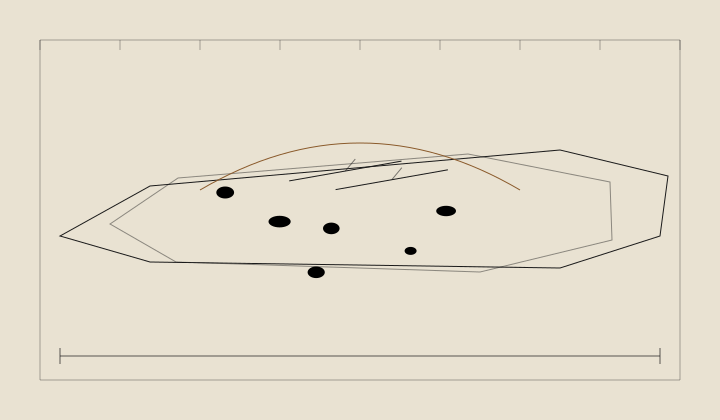
The scald is the oldest trick in rye baking and still the most effective one. Pour boiling water over a third of the rye flour, let it cool, and the starch gelatinises. The loaf that follows is sweeter than the same recipe without a scald, keeps two days longer, and has a softer crumb despite being 60% rye — because gelatinised starch holds water that would otherwise be locked inside the bran.
The scald, with real numbers
200 g of rye flour, 600 g of boiling water, stirred to a smooth paste and left to cool to room temperature. That is a 1:3 scald on a third of the rye in the recipe. It will look like wallpaper paste and smell faintly sweet; that sweetness is the point, because the gelatinised starch is what the amylases in the dough will turn into sugar.
| Ingredient | Weight | Baker's % |
|---|---|---|
| Bread flour | 200 g | 40% |
| Rye (of which 200 g is scalded) | 300 g | 60% |
| Water, total (600 g in the scald) | 440 g | 88% |
| Rye sour 1:3:3, 15 h at 20 °C | 160 g | 32% |
| Salt | 12 g | 2.4% |
A sour built cold, a bulk kept short
The rye sour runs 15 hours at 20 °C, which builds acetic acid without the harshness of a warm build. Two wet folds, 45 minutes apart, and a bulk of only 2 hours at 26 °C to a 25% rise. Between the scald, the sour, and the rye, this dough has very little strength left to lose.
Long steam, long bake, long rest
230 °C, 30 minutes of steam, 58 minutes total. The steam is the longest in this ledger alongside the Detmold entry, and it is what keeps the crust from setting before the centre has finished expanding. Then rest the loaf 24 hours: at 60% rye the crumb is still settling on the second day.
- Crumb rating 4/5: moist, sweet from the scald, keeps five days.
- One long shallow cut end to end, 4 mm deep, sawn not pressed.
- Excellent with strong cheese; the sweetness and the sourness play off each other.
A scald that has cooled to 40 °C is still too warm to meet the sour. It will not kill it, but it will throw the fermentation forward by an hour and make the two-hour bulk meaningless.
Sources / 参考来源
Published reference works consulted for this log: