
Ten percent rye is the smallest addition that is still detectable. Below 5% you are adding grey colour and nothing else; at 10% the loaf picks up a longer sour finish and a faint grey tinge, while the dough behaves exactly like a white dough. It is the cheapest way to make an everyday loaf taste less like every other everyday loaf.
The rye needs a rye starter to show up
The trick is that the starter is fed with 30% rye in its build, not that the final dough contains much rye at all. A rye-fed starter produces more acetic acid and more of the enzymes that break down rye pentosans, and both of those flavours survive into a dough that is otherwise 85% bread flour.
| Ingredient | Weight | Baker's % |
|---|---|---|
| Bread flour | 425 g | 85% |
| Whole wheat | 25 g | 5% |
| Medium rye | 50 g | 10% |
| Water | 385 g | 77% |
| Starter 1:5:5 with 30% rye in the feed, 9 h at 24 °C | 100 g | 20% |
| Salt | 10.5 g | 2.1% |
The schedule does not change
Four coil folds, 40 minutes apart, four hours of bulk at 25 °C to a 55% rise, 14 hours cold. Ten percent rye is not enough to slow the ferment or weaken the dough, so every number from the baseline 78% loaf applies unchanged apart from 1% less water, because rye absorbs slightly more than the bread flour it replaced.
Two cuts, and a slightly faster finish
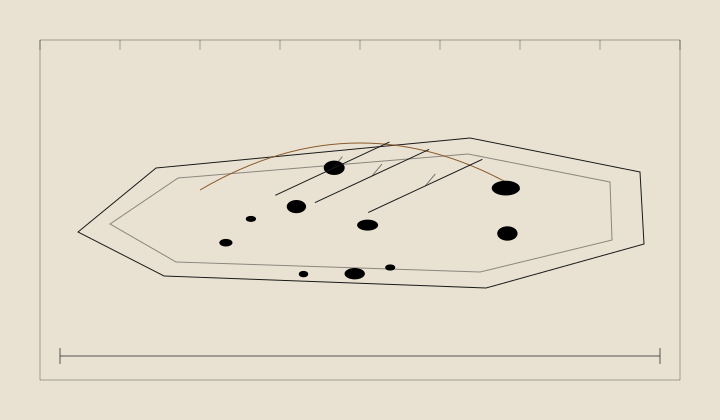
One 25-degree slash plus a small crescent — the crescent is decorative but it also gives the loaf a second opening if the main cut seals. 245 °C, 20 minutes of steam, 44 minutes total. Rye in the dough makes the crust colour a shade deeper, so pull the loaf when the base sounds hollow rather than when the timer says so.
- Crumb rating 4/5: open, faint grey tinge, longer sour finish.
- Good on day one, better on day two, best toasted on day three.
- The rye is invisible in the crumb photo and unmistakable in the flavour.
Do not go above 15% without also adding water and lengthening the cold retard. Ten percent is free; fifteen percent costs you a schedule change, and that is where most people misjudge it.
Sources / 参考来源
Published reference works consulted for this log: