
The brief for this one was simple: a loaf that tastes like rye but slices thin enough for a real sandwich. Most rye breads fail at the slicer — 12 mm of dense crumb that crumbles around the filling. Twenty percent medium rye, a firm 74% dough, and a rolled oblong shape get you a loaf you can cut at 8 mm without a bread knife fight.
Twenty percent is the flavour threshold, not a compromise
Below about 15% rye you get colour and no aroma. Above 35% the crumb stops holding together at deli thicknesses and the dough needs a pan. At 20% the loaf picks up the faint sourness and the grey-cream crumb that reads as "rye" to anyone eating it, and the gluten network is still continuous enough to roll the dough into a tight log.
A firm dough, mixed slowly
74% hydration, 2.2% salt, and 22% starter built 1:6:6 for ten hours at 23 °C. Rye absorbs water faster than wheat, so the dough feels stiffer than a 74% wheat dough after about 20 minutes. Only three folds, 50 minutes apart, all stretch-and-fold in the bowl — rye does not want to be slapped on a bench.
| Stage | Temperature | Time | Signal |
|---|---|---|---|
| Starter build | 23 °C | 10 h | Just domed, not fallen |
| Bulk | 24 °C | 4 h | 40% rise, tacky not sticky |
| Cold retard | 4 °C | 16 h | Surface dry, easy to unmould |
| Steam bake | 235 °C | 15 min | Pale gold |
| Dry bake | 235 °C | 27 min | Deep brown, hollow sound |
Rolling, and why the seam sits in the middle
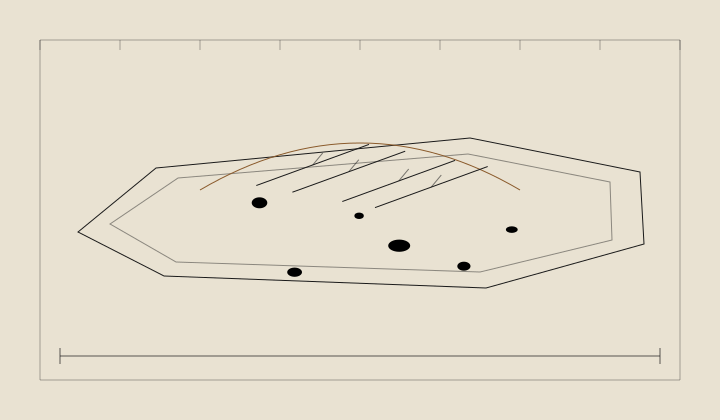
Shaped as a tight oblong with the seam rolled to the centre and pressed flat. The seam in the middle means the loaf expands outward on both sides rather than bursting along one line, which is what gives deli rye its flat-topped rectangle. Three parallel slashes at 20 degrees, 4 cm apart and 5 mm deep, let the top open in step rather than all at once.
Bake this one a day ahead. Sliced cold on day two it is noticeably better than sliced warm on day one — the crumb firms up and the caraway-like sourness comes forward.
Sources / 参考来源
Published reference works consulted for this log: