
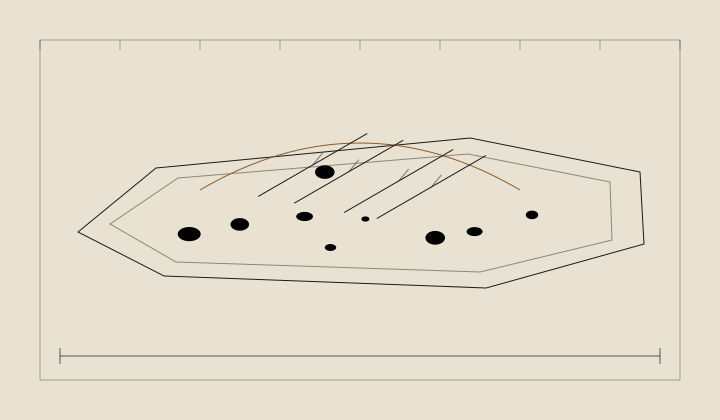
This loaf exists to answer one question: can you swap 30% whole wheat into the baseline schedule without changing anything else? The answer is yes, with two small adjustments — 1% less water and a 25-minute steam instead of 20 — and the result is a loaf you can bake on a Tuesday after work without thinking about it.
What actually changes when you add whole wheat
Three things, and only three. Whole wheat absorbs more water, so hydration drops from 78% to 77%. Its bran releases its moisture slowly during the bake, so the steam stage needs to be longer. And its enzymes make the dough slightly faster, so the bulk finishes 15 minutes earlier than the baseline at the same temperature.
| Change | Baseline 78% | 30% whole wheat |
|---|---|---|
| Hydration | 78% | 77% |
| Bulk | 4.5 h at 25 °C | 4 h at 25 °C |
| Steam | 20 min | 25 min |
| Bake total | 45 min | 44 min |
| Crumb open % | 32% | 28% |
The same four folds, the same clock
Four coil folds, 40 minutes apart — the fold schedule does not change at all. Whole wheat at 30% is not enough to weaken the dough, so the handling is identical to the baseline. If the dough feels noticeably slacker at the third fold, the flour is old or the starter ran warm; check those before changing the recipe.
A slightly deeper score
One 30-degree slash, but 6 mm deep rather than 5, because a dough with bran has slightly less oven spring and needs a bigger opening to reach the same volume. 240 °C, 25 minutes of steam, 44 minutes total. The crumb is lightly speckled and springy with no dense bottom, which is the sign that the steam was long enough.
- Crumb rating 4/5: moist, springy, speckled.
- Good on day one, better on day two for toast.
- Freezes well in slices; whole wheat holds up better than white after thawing.
If you want to bake this on a weeknight, mix the dough at 6 pm, bulk for 4 hours, shape at 10 pm, and bake at 7 am straight from the fridge. The 12-hour retard is built into that schedule and does not need adjusting.
Sources / 参考来源
Published reference works consulted for this log: