
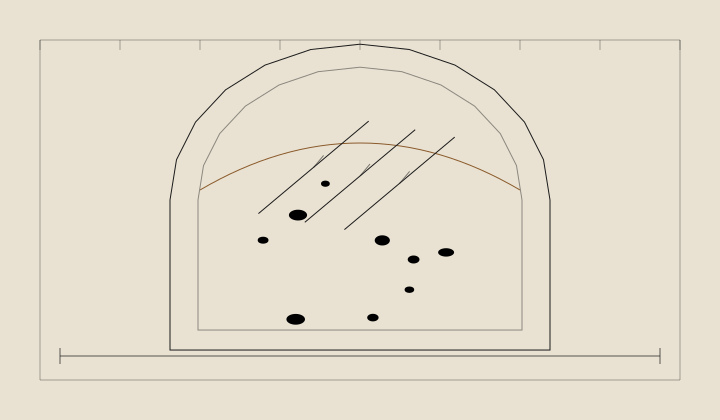
Eighty percent whole wheat with an open crumb is supposed to be impossible. It is not, but it depends less on technique than on one ingredient fact: whole wheat flour that is used within 24 hours of milling behaves almost like a different flour. Freshly milled bran is soft and pliable; bran that has been sitting in a bag for three months is hard and sharp, and it is the hardness that cuts the gluten network.
Fresh milling, and the 24-hour window
Mill 400 g of hard red wheat at the finest setting and use it the same day. The flour will be warm, faintly sweet, and it will absorb water faster than any commercial whole wheat you have used. If you cannot mill at home, buy from a mill that dates its bags, and use within a month rather than the six months a supermarket bag allows.
| Ingredient | Weight | Baker's % |
|---|---|---|
| Bread flour | 100 g | 20% |
| Fresh-milled whole wheat | 400 g | 80% |
| Water | 450 g | 90% |
| Starter 1:4:4, 6 h at 26 °C | 125 g | 25% |
| Salt | 11.5 g | 2.3% |
Five gentle folds and a short bulk
Five coil folds, 35 minutes apart, six if the dough still feels reluctant at the fifth. The rule is that the dough must never tear; a tear in an 80% whole wheat dough does not heal. Bulk 3.25 hours at 26 °C to a 40% rise, then 14 hours cold.
One deep cut and a long steam
One slash at 40 degrees, 9 mm deep — deeper than any other score in this ledger, because an 80% whole wheat loaf needs a large opening to reach the volume a 20% loaf gets for free. 245 °C, 28 minutes of steam, 50 minutes total.
- Crumb rating 4/5: surprisingly open for 80% whole grain, dark and shiny.
- The crumb is dark brown and the crust almost black; that is the grain, not burning.
- Keeps four days and toasts beautifully.
The single biggest lever here is the age of the flour. Technique can add maybe 20% more openness; fresh milling adds far more than that, and it is the one thing you cannot substitute.
Sources / 参考来源
Published reference works consulted for this log: